God's Word Can Stand Alone
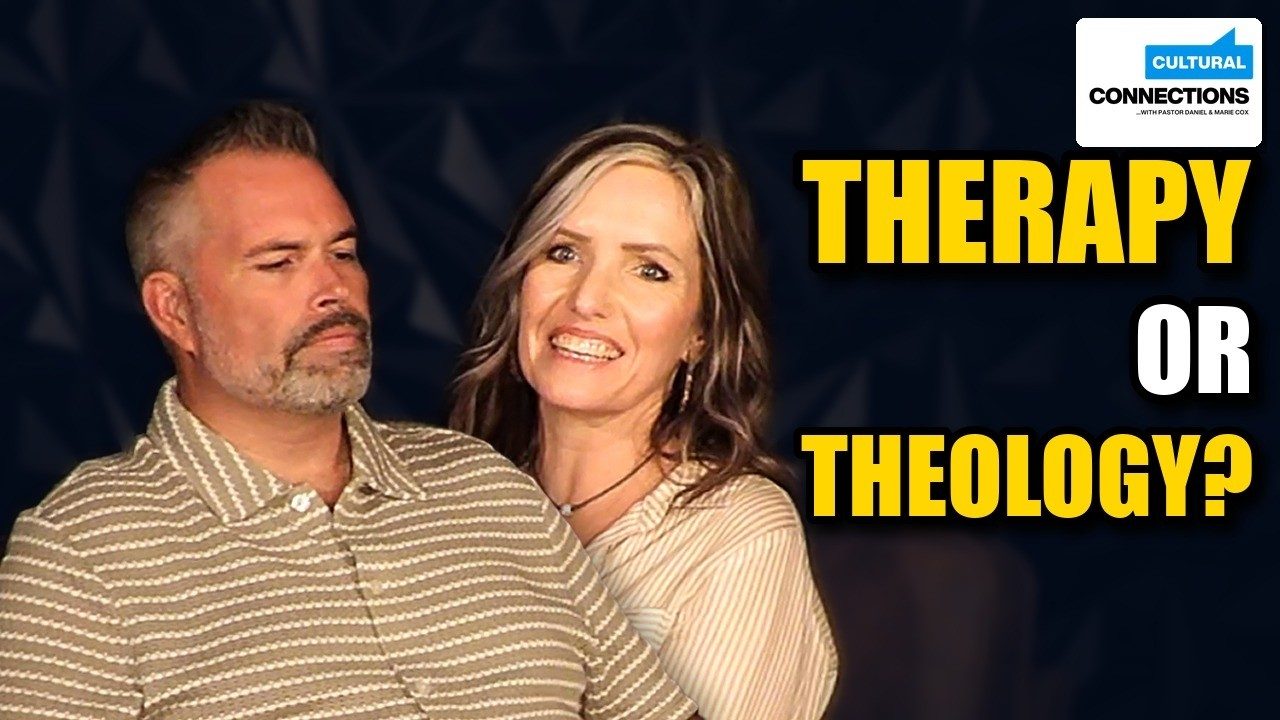 Watch the episode on YouTube
Has therapy replaced theology in the Christian life? That is the question I put to Marie this week. She is a licensed counselor, and I am a pastor, so we each came at it from a different chair. We did not have to agree. We only had to agree with God.
Marie's answer was plain. "If therapy has replaced your theology, then your life is out of bounds." God's Word is always first. It is our ultimate standard. She sees good counseling as an integrative process with God's Word, never a replacement for it. Her first question about any tool is simple. Does this directly oppose Scripture? If it contradicts what God says, then to her it is not truth.
Here is how I would put it. Everything in the Bible is truth, but not all truth is in the Bible. John says as much near the end of his Gospel: "And many other signs truly did Jesus in the presence of his disciples, which are not written in this book." There are true things God did not record for us. So all truth is God's truth. But we accept God's Word as our final authority. Whatever we learn has to sit under the Word, not over it.
I had to own something here. I like to bring Old Testament characters into modern vignettes, and I preached from Psalm 63 recently and said we could infer that David was dealing with rejection and abandonment. That may be fair. But the text does not use those words, and I was reminded to be careful about reading our vocabulary into it.
Marie went further. She has heard people say Elijah was clinically depressed, or that David was bipolar. Her first thought was, what are we doing? It is only right to diagnose someone who is actually your client. And we are taking one small glimpse of one moment and putting a man-made label on it. Did Elijah struggle with some depressed mood? Rightfully so. He was exhausted, and he had just come through a traumatic scene. He's human. He was acting within what we would deem appropriate for what he had endured. Her professor taught her to ask whether a person's reaction fits their circumstances. If it does, they don't get a diagnosis for that.
So what happens to the person in the pew? Some are in counseling. Some are just informed enough to be dangerous. They pick up a little knowledge, get a little excited, and start placing it over God's Word. Diagnoses become labels people wear to identify who they are. Marie said, "Any label or diagnosis that is man-made should not be your identity." Our identity is found in the Lord Jesus Christ. We live in a broken world, with broken systems and broken bodies. But that is not who we are. Labels can trap people, and she does not want anyone trapped.
Are we over-therapizing? Marie sees people on both sides. More people care about mental health than a generation ago, and she thinks that is a good thing. But the pendulum can swing too far, until we lean on one part of the whole person as if it were everything. "The problem with mental health is it focuses sometimes too much on the mental and the emotional, and it forgets the spiritual."
Counseling has its place. But as Marie put it, she doesn't need to take something like the DSM-5 and put it over God's Word. God's Word can stand alone.
Watch the episode
https://www.youtube.com/watch?v=9m4nUF6nKsM
John 20:30. Psalm 63.
If this helped, send it to someone who has been carrying a label as if it were their name. Not as a lecture. As a reminder of who they are in Christ.